

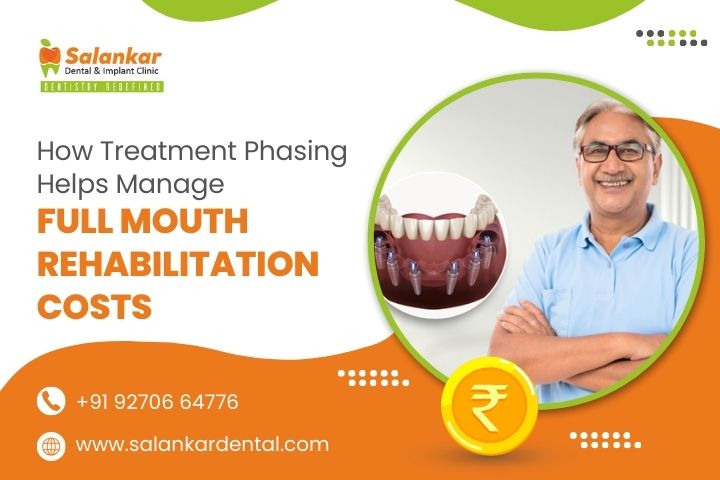
For many patients, the idea of fixing their entire mouth can feel overwhelming, not just emotionally, but financially too. Multiple procedures, several appointments, and a long-term plan can make anyone pause. That’s where treatment phasing steps in like a calm guide, breaking a big journey into smaller, manageable steps.
At Salankar Dental and Implant Clinic, the approach to full mouth rehabilitation treatment in Somalwada has helped many patients restore their smiles without feeling the pressure of doing everything at once.
This blog will walk you through how treatment phasing works, why it makes sense, and how it can significantly help manage the cost of full-mouth rehabilitation, all in a reassuring, easy-to-understand way.
What Is Full Mouth Rehabilitation?
Think of your mouth like a busy intersection: teeth, gums, jaw joints, and muscles all working together. When one signal fails, traffic slows. When several fail, chaos follows. Full mouth rehabilitation is a structured dental plan that restores function, comfort, and appearance when multiple dental issues exist together.
It may involve a combination of treatments such as:
- Dental implants
- Crowns and bridges
- Root canal treatments
- Gum therapy
- Bite correction
- Dentures or implant-supported prosthetics
Because every mouth has a different story, no two rehabilitation plans are identical. That’s also why the cost can vary so much, and why a phased approach becomes so useful.
Why the Cost Feels Heavy (and Why That’s Understandable)
Hearing the words “full mouth rehabilitation” often brings a mental calculator to life. Patients immediately think about expenses, timelines, and whether it’s all possible at once.
The full mouth rehabilitation cost depends on several factors:
- Number of damaged or missing teeth
- Type of restorations needed
- Bone health and gum condition
- Choice of materials and implants
- Duration of treatment
Trying to tackle everything in one go can feel like paying for an entire house renovation upfront. Technically possible but rarely practical.
Enter Treatment Phasing: One Step at a Time
Treatment phasing simply means dividing the entire rehabilitation plan into logical stages, spread over time. Each phase focuses on a specific goal, such as health, function, or aesthetics, while keeping the bigger picture in mind.
Instead of doing everything at once, your dentist prioritizes what needs immediate attention and schedules the rest strategically. This approach is commonly used at Salankar Dental and Implant Clinic, especially for patients opting for full mouth rehabilitation treatment in Somalwada.
How Treatment Phasing Helps Manage Costs
1. Immediate Problems Come First
The first phase usually focuses on urgent issues: pain, infection, or severely damaged teeth. Treating these early prevents complications that could increase costs later.
By addressing problems when they’re still manageable, patients often avoid more complex (and expensive) procedures down the line.
2. Payments Are Spread Over Time
One of the biggest advantages of phasing is financial breathing room. Instead of a single large expense, costs are distributed across months or even longer.
This staged approach makes the full mouth rehabilitation cost feel far less intimidating and easier to plan around regular household expenses.
3. Flexibility Without Compromising Results
Life happens. Work schedules change, festivals come up, and family responsibilities take priority. Treatment phasing allows flexibility without derailing the overall plan.
You can pause between phases if needed, while still moving steadily toward a healthier smile.
4. Better Long-Term Decision-Making
Starting with essential treatments gives patients time to understand their oral health better. As trust builds and results become visible, many feel more confident proceeding with advanced restorative or cosmetic phases.
This step-by-step clarity often leads to smarter decisions rather than rushed ones.
Common Phases in Full Mouth Rehabilitation
While each plan is personalized, treatment phasing usually follows a pattern:
Phase 1: Stabilization and Health
This includes treating infections, gum disease, extractions (if required), and basic clean-ups. The goal is to create a healthy foundation.
Phase 2: Structural Restoration
Missing teeth may be replaced with implants, and damaged teeth restored with crowns or bridges. Bite alignment is also addressed here.
Phase 3: Functional Refinement
Adjustments are made to ensure comfort while eating and speaking. This phase focuses on how everything works together.
Phase 4: Aesthetic Enhancements
Once the function is restored, cosmetic improvements like smile design or tooth reshaping may be considered, only if the patient wishes.
This phased structure ensures that full-mouth rehabilitation treatment is thorough without being overwhelming.
Emotional Comfort Matters Too
Dental treatments aren’t just physical; they’re also emotional. Long procedures can cause anxiety, fatigue, or hesitation. Phasing helps patients mentally adjust to each step instead of facing everything at once.
Seeing progress after each phase builds confidence. It’s like watching a garden grow; you don’t plant, water, and harvest in one day.
Choosing the Right Clinic Makes a Difference
A phased plan only works when it’s carefully designed and clearly explained. At Salankar Dental and Implant Clinic, patients are walked through each phase of full mouth rehabilitation treatment in Somalwada in simple language, with transparency around timelines and costs.
This clarity helps patients understand how their full mouth rehabilitation cost is structured and what value each phase brings.
FAQs
Q1. How long does full mouth rehabilitation take?
Full mouth rehabilitation typically takes several months, depending on the complexity of the treatment and the number of phases involved. This process includes time for healing, especially if implants are involved. Your dentist will give you a detailed timeline based on your unique needs.
Q2. How much does full mouth rehabilitation cost?
The cost of full mouth rehabilitation treatment can vary widely based on the procedures involved (such as implants, crowns, or bridges). Phasing the treatment allows for a manageable spread of costs over time, and your dentist can provide a personalized estimate based on your specific treatment plan.
Q3. Can I eat normally after full mouth rehabilitation?
After the treatment is complete and you’ve fully healed, you’ll be able to eat normally. During the healing phases, your dentist may recommend softer foods to avoid putting too much pressure on your teeth.
Q4. Is full mouth rehabilitation painful?
While some discomfort during treatment and recovery is common, the procedure is generally well-tolerated, especially with modern pain management techniques. Most patients report only mild soreness after treatment, which can be managed easily.
Q5. How long will my full mouth rehabilitation last?
With proper care, full mouth rehabilitation can last many years. The longevity of your restoration depends on factors like oral hygiene, lifestyle habits, and the materials used in your treatment. Regular dental check-ups are important to ensure everything stays healthy.
A Smile Built Step by Step
Full mouth rehabilitation isn’t a sprint; it’s a steady walk toward better health and confidence. With treatment phasing, patients don’t have to choose between their smile and their peace of mind.
If you’ve been considering full mouth rehabilitation treatment in Somalwada, Salankar Dental and Implant Clinic’s phased approach can make the journey smoother, more affordable, and far less stressful.
We are here to guide you through each step at a pace that feels right for you.
Book a consultation today and explore a treatment plan that fits your smile, your schedule, and your comfort.