


Think of getting dental implants a bit like building a strong house.
You wouldn’t start by putting the roof on first, right? Every solid structure needs a proper foundation, careful construction, and finally the finishing touches that make everything complete.
Dental implants work in a similar step-by-step way. Each stage has a specific role, and together they help rebuild a missing tooth so it feels stable, natural, and long-lasting.
In areas like Manish Nagar in Nagpur, where busy routines often push dental visits to the bottom of the to-do list, people usually start looking into solutions only when a missing tooth begins affecting daily life. When patients begin exploring dental implants in Manish Nagar, one of the most common questions is how the treatment actually works and why it happens in stages.
Let’s walk through the three stages of dental implants and see how dentists rebuild a smile, one carefully planned step at a time.
Why Dental Implants Are Different from Other Tooth Replacements
Before we jump into the stages, it helps to understand why implants are treated differently than options like dentures or bridges.
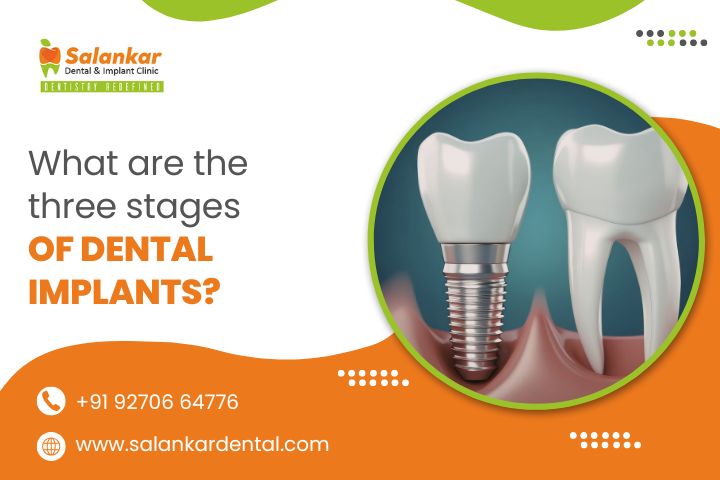
Dental implants are designed to replace the entire tooth structure, not just the visible portion. That means they recreate:
- The root of the tooth (using a titanium implant)
- The support system inside the jawbone
- The visible crown that looks like a natural tooth
This approach makes implants stable, long-lasting, and extremely natural-looking. Many patients looking for dental implants in Manish Nagar choose them because they behave almost exactly like real teeth.
Now let’s break down the process stage by stage.
Stage 1: The Foundation – Placing the Dental Implant
Think of this stage as laying the foundation of a house. Everything that comes afterward depends on how well this step is done.
During this stage, the dentist places a small titanium post inside the jawbone. This post acts as the artificial root of the tooth.
What Happens During This Step?
The procedure is usually done under local anesthesia, so you won’t feel pain during the treatment. The dentist carefully places the implant into the jawbone where the missing tooth used to be.
The appointment typically involves:
- Examining the jawbone and gum health
- Placing the titanium implant into the bone
- Closing the gum tissue over the implant
The procedure itself usually takes 30–60 minutes per implant.
Why Titanium?
Titanium is used because it has a unique ability to bond naturally with bone. Over time, the jawbone grows around the implant, locking it firmly in place.
This ability is what makes implants so stable compared to other tooth replacement options.
Many patients who visit our dental clinic in Manish Nagar are surprised to learn that once the implant is placed, the next step actually involves waiting. But that waiting period is incredibly important.
Stage 2: The Healing Phase – Bone and Implant Become One
If the first stage is about placing the foundation, the second stage is about strengthening it.
After the implant is placed, the jawbone begins a natural healing process called osseointegration. This is the stage where the bone grows around the implant and secures it permanently.
What Is Osseointegration?
Osseointegration is simply the body accepting the implant and integrating it into the bone structure.
Think of it like planting a tree sapling in soil. At first, it stands on its own, but over time, the roots spread and anchor it firmly in the ground.
The same thing happens with dental implants.
How Long Does Healing Take?
Healing usually takes 3 to 6 months, depending on factors like:
- Bone quality
- Overall health
- Oral hygiene
- Whether bone grafting was needed
During this time, patients can usually continue with normal daily activities.
At Salankar Dental and Implant Clinic, our dentist in Manish Nagar will monitor the healing process through follow-up visits to ensure the implant is integrating properly.
What Can You Expect During This Period?
Most patients experience only mild discomfort for a few days after the procedure. After that, the implant stays quietly beneath the gums while the bone strengthens around it.
This stage might seem slow, but it’s what gives implants their remarkable durability and stability.
Stage 3: The Final Step – Placing the Crown
Once the implant has fully bonded with the jawbone, it’s time for the exciting part: restoring the visible tooth.
This stage involves attaching a dental crown to the implant so it looks and functions like a natural tooth.
The Abutment: A Small but Important Connector
Before the crown is placed, a small connector called an abutment is attached to the implant.
This piece sits just above the gum line and acts as the base for the crown.
Creating the Custom Crown
The crown is designed specifically for your smile. The dentist ensures that it matches:
- The color of the surrounding teeth
- The shape and size of natural teeth
- Your bite alignment
Once the crown is fixed onto the abutment, the implant becomes a fully functional tooth replacement.
Patients who receive dental implants in Manish Nagar at our clinic often say this is the moment when everything finally feels complete.
What Makes Dental Implants Worth the Process?
Yes, implants take multiple stages, but the results can last decades with proper care.
Here’s why many people prefer them over other options:
Natural Appearance
Implants look and feel like natural teeth.
Long-Term Durability
With good oral hygiene, implants can last many years.
Strong Chewing Ability
You can eat comfortably without worrying about movement.
Jawbone Protection
Implants help prevent bone loss that occurs when teeth are missing.
For patients visiting our dental clinic in Manish Nagar, these advantages often make implants the most reliable solution for missing teeth.
FAQs
Q1. Are dental implants painful?
Dental implant procedures are usually done under local anesthesia, so you should not feel pain during the surgery. Some mild soreness or swelling may occur after the procedure, but it typically subsides within a few days. Most patients describe the recovery as easier than they expected.
Q2. How long do dental implants last?
Dental implants are designed to be a long-term solution for missing teeth. With proper oral hygiene and regular dental visits, they can last for many years, often even decades. The crown may need replacement after some time due to normal wear, but the implant itself usually remains stable.
Q3. Who is a good candidate for dental implants?
Most adults with good oral health and sufficient jawbone density can be candidates for implants. However, factors such as gum health, bone structure, and medical history play an important role. A consultation with a qualified dentist helps determine whether implants are suitable for your situation.
Your Smile Deserves a Strong Comeback
Living with a missing tooth can feel like a small gap in everyday life; something you learn to adjust to, but never fully ignore. Dental implants offer a way to restore not just the appearance of your smile but also its strength and function.
If you’re considering dental implants in Manish Nagar, visiting an experienced team can make the process feel clear and comfortable from start to finish. At Salankar Dental and Implant Clinic in Nagpur, the focus is on guiding patients through each stage with careful planning and personalized care.
A missing tooth doesn’t have to stay that way forever. Sometimes, rebuilding your smile simply begins with taking the first step toward the right solution.